
How to Help a Child with a Fear of Thunderstorms: Storm Anxiety in Kids
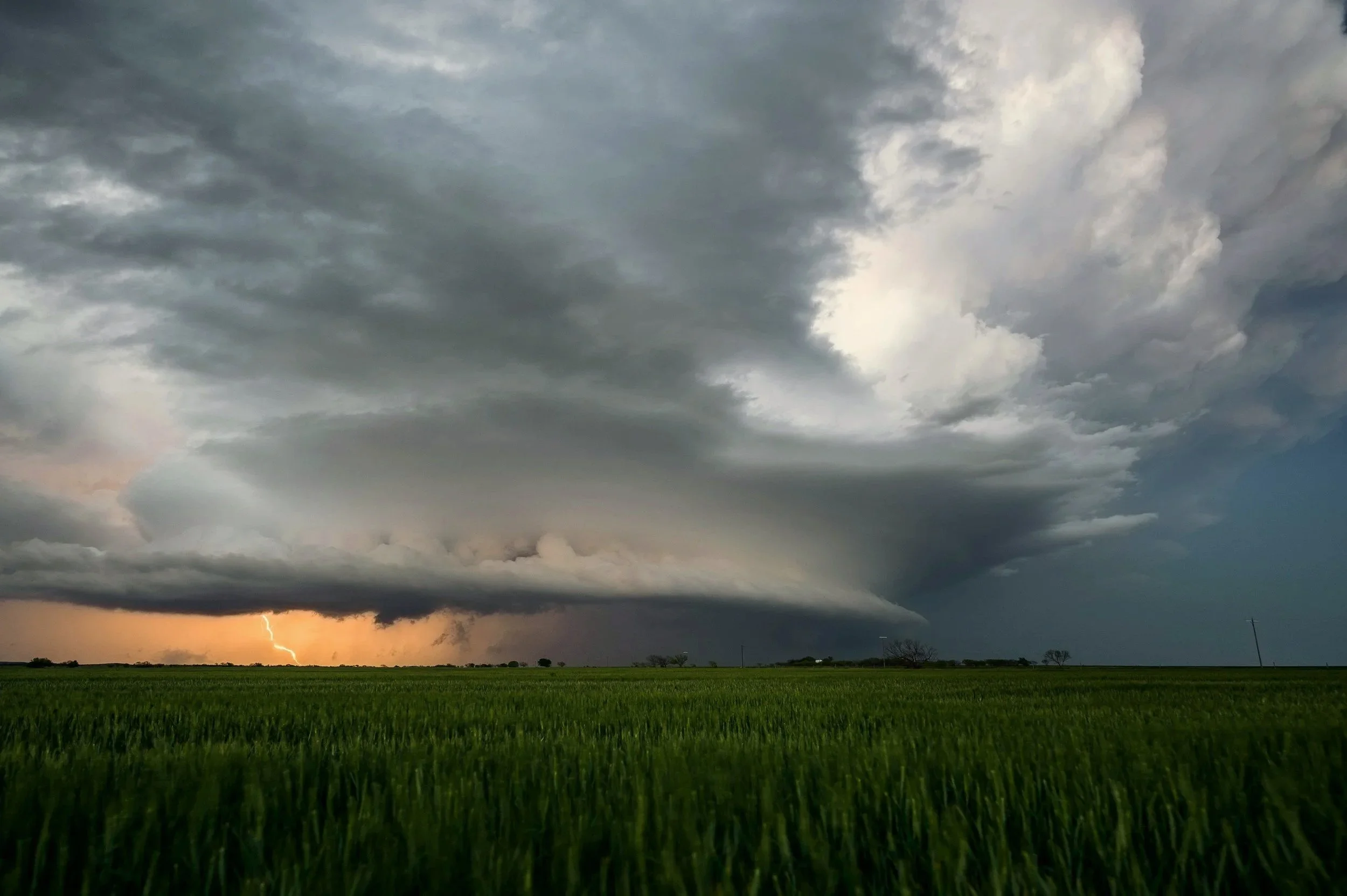
You know how it goes. The sky gets dark, the wind picks up, and before the first crack of thunder, your child is already unraveling. Maybe they are glued to the weather app, asking you for the fifth time whether it is going to be bad. Maybe they are crying in a closet, or they have ended up in your bed every stormy night for the past three months. You have tried everything: sitting with them, explaining that they are safe, riding out storm after storm together. And yet, every time the clouds roll in, you find yourself right back at square one.
If this sounds familiar, you are not doing anything wrong. And your child is not simply being dramatic. What you may be witnessing is astraphobia: a specific phobia of thunder and lightning that is recognized in the clinical literature as a genuine anxiety disorder. It is more common than most parents realize, and it is treatable.
Here in Central Texas, storm season runs from spring through early summer, with April through June bringing the most active severe weather. That means families in Austin and Round Rock often face this fear repeatedly, month after month, with no real break. If your child's fear of storms is taking a toll on your whole family, this guide is for you.
What Is Astraphobia? Understanding Fear of Thunderstorms in Children
Most young children find thunder startling. That is completely normal. The brain is wired to react to loud, sudden sounds as potential threats, and in early childhood, between roughly ages two and six, some fear of storms is developmentally expected. What separates a normal startle response from a clinical phobia is not simply how scared a child gets in the moment, but how much the fear is taking over their life.
Astraphobia (sometimes called brontophobia) is a specific phobia characterized by a marked, persistent, and excessive fear of thunder and lightning. According to the DSM-5-TR, a diagnosis of specific phobia requires that:
The fear is out of proportion to the actual danger and sociocultural context
The feared stimulus (e.g., storms or storm-related cues like dark clouds, thunder sounds, or weather forecasts) almost always provokes immediate anxiety
The situation is actively avoided or endured with intense distress
The fear is persistent, typically lasting at least six months
The fear causes clinically significant distress or impairment in functioning
The fear is developmentally inappropriate for the child’s age
That last criterion often matters most for families. A phobia is not defined by how frightened a child appears during a storm; it is defined by how much the fear restricts their life. When a child refuses school on cloudy days, cannot sleep alone during storm season, or when family plans are repeatedly altered to avoid weather-related distress, the fear has crossed into clinically significant territory.
Signs Your Child's Fear of Storms Has Become a Phobia
Parents are often the first to notice that something has shifted. The child who used to just want a hug during a thunderstorm now seems consumed by storm-related worry even on sunny days. Here are the signs that storm fear has moved beyond normal childhood nervousness.
Anticipatory Anxiety and Weather Monitoring
Does your child check the weather forecast before school every morning? Do they ask you repeatedly throughout the day whether it is going to storm? Anticipatory anxiety is one of the most exhausting features of a phobia for families, because the distress is not confined to the storm itself. A child with astraphobia may spend hours in a state of dread before a drop of rain falls. Clinically, this pattern reflects the phobia extending beyond the feared stimulus into a chronic state of worry and hypervigilance about future threat.
Avoidance That Keeps Expanding
Avoidance is the engine that keeps a phobia running. It starts reasonably enough: a child wants to stay inside when it rains. But over time, avoidance tends to spread. The child who once only feared active storms may begin refusing to go outside on overcast days, avoiding movies with storm scenes, or wanting to leave birthday parties the moment the sky looks dark. Families often find themselves quietly reorganizing life around the phobia, skipping outdoor activities, changing weekend plans, or driving home early from events, without fully realizing how much has shifted.
Intense Physical Reactions During Storms
During storms, the child may experience racing heart, difficulty breathing, trembling, crying, clinging, vomiting, or a complete inability to be calmed. These are not behavioral choices. They are genuine physiological responses: the child's nervous system has learned to treat storms as a life-threatening event, triggering a full fight-or-flight response. Understanding this can help parents shift from frustration to compassion, because the child is not being difficult. Their body is genuinely in a state of perceived danger.
Sleep Disruption Through Storm Season
Many parents of children with astraphobia describe dreading spring not because of the storms themselves, but because of what storm season does to the family's sleep. A child may refuse to fall asleep alone from April onward, wake repeatedly during the night at any sound that resembles thunder, or insist on sleeping in the parents' room for weeks at a time. By the time summer arrives, the whole household is exhausted.
Reassurance-Seeking That Never Quite Works
If you have found yourself saying "I promise you are safe" repeatedly and watching your child ask again thirty seconds later, you have experienced one of the most clinically significant features of a phobia. Reassurance provides momentary relief but does not reduce underlying anxiety. In fact, research shows that repeated reassurance-giving often functions similarly to a compulsion: it temporarily lowers distress while reinforcing the child's belief that they cannot tolerate the storm without external help. Most parents arrive at this point exhausted and confused, having done everything they could think of, and wondering why nothing is working. This is when professional support can make a significant difference.
Why Children Develop Astraphobia: The Science Behind Storm Fear
One of the first questions parents often ask is: why did this happen? Did I cause it? The answer is almost always no. Specific phobias develop through well-documented pathways that have nothing to do with parenting failure.
Direct conditioning: A child experiences a frightening storm event (a power outage, a tree falling, a parent visibly panicking) and the brain forms a strong association between storms and danger. One significant experience can be enough.
Vicarious learning: A child observes a parent, sibling, or peer reacting with significant fear to storms and learns that storms are dangerous, even without any direct negative experience of their own.
Informational transmission: Repeated exposure to frightening information about storms (through news coverage of tornadoes, weather alerts, or overheard adult conversations) can be sufficient to establish a phobia in a child who has never experienced a dangerous storm firsthand.
Temperament and genetic vulnerability: Children with an anxious temperament or a family history of anxiety disorders carry a higher biological vulnerability to developing specific phobias.
Once established, a phobia is maintained through avoidance. Every time a child avoids a storm or a storm-related cue, they feel immediate relief. That relief is powerful and real, and it teaches the brain that avoidance is the correct response to storms. Over time this creates a self-reinforcing cycle: avoidance prevents the child from learning that they can cope safely in appropriate conditions, which keeps the fear alive, which drives more avoidance. This is why waiting for a child to grow out of a phobia rarely works, and why well-meaning accommodations (like always letting a child sleep in the parents' room during storms) can unintentionally deepen the problem over time.
Evidence-Based Treatment for Storm Phobia in Children
Here is the most important thing to know: specific phobias are among the most treatable anxiety disorders in children. Parents who have spent years managing storm meltdowns are often surprised by how much progress a child can make in a relatively short period of time with the right treatment.
The gold-standard, evidence-based treatment is exposure-based Cognitive Behavioral Therapy (CBT). This is not about forcing a child into frightening situations. It is a gradual, collaborative process built entirely around the child's readiness and pace.
Exposure Therapy for Fear of Storms
Exposure therapy helps children gradually face what they fear in a safe, structured way. Rather than avoiding storms, the child is supported in approaching storm-related cues step by step, allowing them to learn that the danger they anticipate is often exaggerated or manageable, and that their anxiety will rise and fall naturally.
This process is known as inhibitory learning. Through repeated experiences, the brain forms new associations that compete with the original fear response. Instead of needing to feel calm before facing a storm, the child learns that they can tolerate distress, that anxiety is temporary, and that the outcomes they fear are either unlikely or less overwhelming than expected.
The goal is not to eliminate fear, but to help the child develop confidence in their ability to handle it.
A therapist specializing in anxiety works collaboratively with the child and family to develop an exposure menu, which is a personalized, graduated sequence of feared situations that often progresses from least to most anxiety-provoking. For astraphobia, this might include:
Looking at pictures of storm clouds
Watching short video clips of rain
Listening to recordings of thunder at low volume
Gradually increasing the volume of thunder sounds
Watching storm footage that includes both thunder and lightning
Standing outside during light rain
Remaining in a safe location during a mild thunderstorm without seeking reassurance
During exposures, the goal is to help the child stay engaged with the experience long enough for new learning to occur. This often includes reducing reliance on safety behaviors, such as excessive reassurance-seeking, avoidance, or distraction, because these can interfere with learning that anxiety is tolerable and that feared outcomes are unlikely or manageable.
At the same time, current research supports a flexible, developmentally sensitive approach. Some safety behaviors may be used initially to help a child engage in exposure, particularly when anxiety is high, but are typically faded over time as the child builds confidence. Exposures that allow for full emotional engagement and disconfirmation of feared outcomes, without reliance on safety behaviors, tend to produce more durable gains.
The Role of Cognitive Restructuring in Storm Phobia Treatment
CBT also includes cognitive restructuring: helping children identify and challenge the catastrophic thoughts that intensify their fear. A child who is convinced that lightning will strike their house can be gently guided toward a more accurate appraisal of risk. This does not mean dismissing the child's fear. It means teaching them to evaluate threat more realistically, which reduces the cognitive fuel that amplifies the physiological response.
How Long Does Treatment for Fear of Storms Take?
Many families are relieved to learn that specific phobias often respond faster to treatment than other anxiety disorders. Many children make significant gains within 8 to 16 sessions, and some intensive single-session protocols have shown meaningful improvement in controlled research settings. The pace depends on the severity of the phobia, the child's age and developmental level, and how consistently the family is able to practice exposures between sessions.
What Parents Can Do Right Now, and What to Stop Doing
If treatment is not yet in place, there are things parents can do (and stop doing) that affect the trajectory of a child's phobia in meaningful ways. A strong body of research suggests that the way parents respond to a child's fear can either help break the cycle or inadvertently keep it going.
Do: Validate the Feeling
Your child's fear is real, even when the danger is not. Acknowledging that without amplifying it is one of the most helpful things a parent can do. Phrases like "I can see this feels really scary for you, and I know that is hard" validate the child's emotional experience without confirming that the storm is actually dangerous. The goal is warmth without reassurance about outcomes.
Do: Maintain Consistent Routines
To the extent it is safe, help your child maintain normal activities during mild storms. Canceling school, skipping practices, or leaving events early because the sky looks threatening sends a powerful implicit message: storms are dangerous enough to disrupt your life. Each accommodation, even small ones, confirms the child's fear and deepens the avoidance pattern. This is one of the hardest things for parents to hold, especially when a child is distressed. But it is one of the most clinically important.
Stop: Repeated Reassurance
It is one of the most natural things in the world to want to tell your frightened child that everything is going to be fine. But if you have noticed that reassurance helps for about thirty seconds before your child asks again, you have already observed the problem. Research on parental accommodation shows that repeated reassurance often functions like a compulsion: it provides brief relief while reinforcing the underlying belief that the child cannot manage without external confirmation of safety. A warm acknowledgment of the child's fear is appropriate, while repeated reassurance through a storm often backfires. Stopping reassurance abruptly can be overwhelming for children, so it is often helpful to work with a licensed mental health professional to develop a gradual, structured plan for reducing excessive reassurance-seeking.
When to Seek Professional Help for Your Child's Storm Fear
If you are reading this, you have probably already tried a lot on your own. Many of the families we see have been managing their child's storm phobia for a year or more before reaching out, often because they hoped things would improve on their own, or because they were not sure whether what they were seeing was serious enough to warrant professional support. It is. Consider reaching out if your child:
Has been significantly fearful of storms for six months or longer
Checks weather apps or seeks reassurance multiple times per day
Refuses school, sports, or other activities due to weather concerns
Cannot be calmed during storms despite repeated parental reassurance
Has sleep significantly disrupted throughout storm season
Shows signs of anxiety in other areas of life as well
You do not have to wait until the fear is completely out of control to ask for help. Earlier intervention means less time spent in the avoidance cycle and a better outcome overall. A child who begins treatment this spring will be in a genuinely different place by the time storm season returns next year.
Compassionate, Evidence-Based Treatment for Childhood Phobias in Austin and Round Rock
At Austin Anxiety & OCD Specialists, we specialize in treating anxiety and phobias in children and adolescents using Exposure-based Cognitive Behavioral Therapy (CBT), a therapy approach supported by decades of research. We understand how exhausting it is to watch your child suffer through storm season year after year, and how helpless it can feel when nothing you do seems to make a lasting difference. That is exactly what we are here for.
We see children at our Austin, Westlake, and Round Rock therapy offices and offer online therapy for families across Texas. If your child's fear of storms is affecting their daily life and your family's peace of mind, we would love to help. Reach out today to learn more about our Therapy for Youth and Phobia Treatment services, or to request an appointment.