
Health Anxiety: When Worry About Your Body Won't Let Go
You noticed a headache three days ago. By the end of the day you had Googled it seventeen times, convinced yourself it might be something serious, called your doctor, received reassurance, felt better for about an hour, and then started wondering if the doctor had missed something. The headache is gone now but the worry isn't. Something else has taken its place.
Or maybe it's not symptoms. Maybe it's the annual physical you've been avoiding for two years because you're terrified of what they might find. Or the mole you've been monitoring obsessively for months, photographing it weekly, comparing images, asking your partner to look at it, asking again, still not sure. Or the way you feel your pulse at your wrist multiple times a day, just to make sure.
From the outside, health anxiety can look like hypochondria, excessive caution, or being someone who just "really takes their health seriously." What it actually feels like from the inside is a kind of relentless dread that attaches itself to your body and never fully lets go. Every sensation is a potential signal. Every symptom is a possible diagnosis. And no amount of reassurance, testing, or clean results closes the gap for long.
This is health anxiety. And it is exhausting in a way that is very hard to explain to someone who hasn't lived it.
What is Health Anxiety?
Health anxiety is a condition characterized by excessive, persistent worry about having or developing a serious illness, despite medical reassurance to the contrary. It is sometimes called illness anxiety disorder or, when accompanied by physical symptoms, somatic symptom disorder.
It is not hypochondria in the dismissive sense that word is often used. It is not attention-seeking, drama, or weakness. Health anxiety is a genuine anxiety disorder driven by the same underlying mechanisms as other anxiety conditions: a threat detection system that has become overactive and overinclusive, scanning the body for danger the way other anxiety disorders scan the environment.
What makes health anxiety particularly difficult is that the body is always producing sensations. Headaches, muscle twitches, fatigue, heart palpitations, digestive discomfort, these are all normal parts of being human. For most people they register briefly and fade. For someone with health anxiety, each one becomes a potential data point, something to monitor, investigate, and worry about. The signal-to-noise ratio has been catastrophically disrupted.
Health anxiety exists on a spectrum. At the milder end, it might look like occasional excessive worry about symptoms that resolves relatively quickly. At the more severe end, it can consume hours of every day, drive repeated unnecessary medical visits, cause significant avoidance of medical care altogether, and progressively narrow a person's life as they organize their decisions around what they might have or what they might discover.
What Does Health Anxiety Look Like Day to Day?
Because health anxiety is so often invisible and so frequently dismissed by the people around the person experiencing it, it's worth describing what it actually looks and feels like in daily life.
Symptom monitoring and body checking
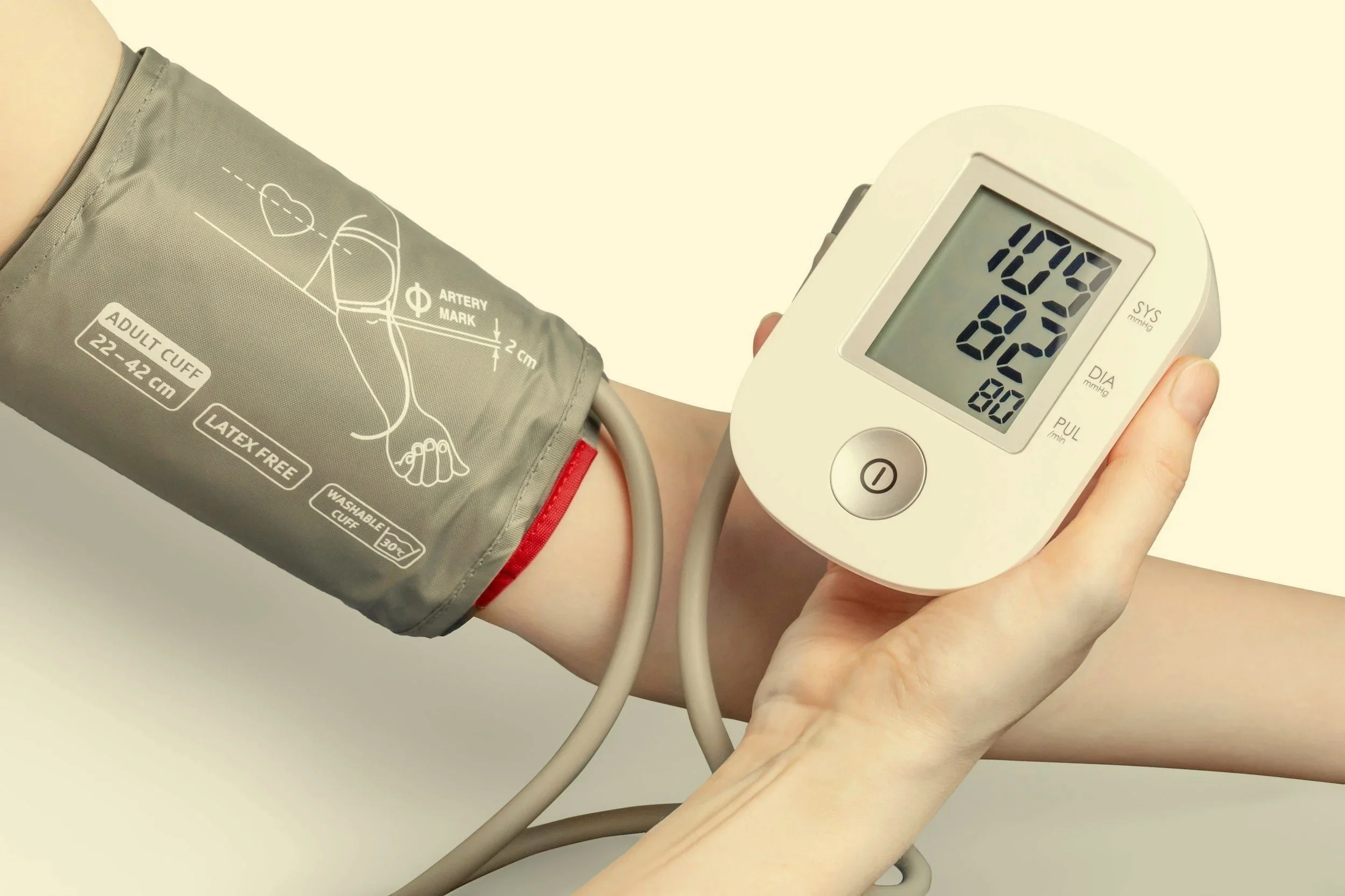
Repeatedly checking pulse, blood pressure, lymph nodes, skin, or other body parts for signs of illness. Noticing and tracking every physical sensation. Comparing symptoms over time. Taking temperature repeatedly. Feeling a spot, lump, or area of skin multiple times a day to see if it has changed.
Reassurance seeking
Asking partners, family members, or friends repeatedly whether a symptom sounds serious. Visiting the doctor for the same concern multiple times without finding lasting relief. Calling nurse lines. Seeking second and third opinions. Each reassurance provides brief relief, and then the doubt returns.
Compulsive online research
Hours spent searching symptoms, reading medical articles, scanning forums for people who have had similar experiences. Dr. Google is almost always the enemy of health anxiety. The internet surfaces worst-case scenarios reliably, and health anxiety latches onto them.
Medical avoidance
This is the pattern that surprises people most. Many people with health anxiety don't seek excessive medical care. They avoid it entirely, because they are terrified of what a test might reveal. They skip annual physicals, delay addressing real symptoms, and avoid doctors' offices and hospitals because the anxiety of knowing feels worse than the uncertainty of not knowing. This avoidance can lead to genuinely significant health consequences.
Anticipatory anxiety before appointments
The days or weeks before a scheduled medical appointment are often the most distressing. Sleep is disrupted. Concentration is impaired. The imagined results of the appointment feel real and catastrophic before anything has even been discovered.
Interpreting normal sensations as symptoms
A racing heart during exercise is a cardiac event. A headache is a brain tumor. Fatigue is cancer. This is is what an overactive threat detection system does with ambiguous information. The brain fills in the uncertainty with the worst available interpretation.
Difficulty tolerating uncertainty
At the core of health anxiety is an inability to tolerate not knowing. Most people live comfortably with the background reality that they might develop a serious illness at some point and simply don't think about it often. For someone with health anxiety, that uncertainty is unbearable and demands constant management.
The Reassurance Trap
If you have health anxiety, you already know that reassurance doesn't work, at least not for long. You get a clean test result, feel relieved for a day or two, and then a new worry takes the place of the old one. You see the doctor, receive reassurance that your symptoms are benign, and feel better until you start wondering if they missed something.
This is not a failure of willpower or rationality. It is the predictable result of how reassurance interacts with anxiety.
When you seek reassurance and receive it, your nervous system learns that reassurance was necessary to manage the distress. The implicit message is that the threat was real enough to require external confirmation before feeling safe. The next time uncertainty arises, the same process repeats, and the reassurance needs to be sought again. Over time the threshold for needing reassurance drops and the frequency of seeking it increases.
This is the reassurance trap, and it is one of the primary ways health anxiety maintains and strengthens itself over time. Breaking out of it requires not eliminating the uncertainty, which is impossible, but learning to tolerate it differently. That is exactly what effective treatment works on.
How Does Health Anxiety Overlap With OCD
Health anxiety and OCD exist on a continuum, and for some people the distinction is clinically meaningful. When health anxiety involves intrusive thoughts about illness, compulsive checking or reassurance-seeking rituals, and a cycle of obsession and temporary relief, it often overlaps significantly with OCD, specifically with what is sometimes called somatic OCD or health OCD.
The treatment implications are important. For people whose health anxiety has a strong OCD quality, the most effective treatment approach emphasizes ERP rather than purely cognitive approaches. Understanding which end of the spectrum a person's presentation sits on is one reason a proper clinical assessment matters before beginning treatment.

What Does Effective Treatment Look Like For Health Anxiety?
Health anxiety responds very well to treatment, and the approach is specific. Not all therapy is equally effective, and this matters.
Cognitive Behavioral Therapy (CBT)
CBT addresses the thought patterns that fuel health anxiety. People with health anxiety engage in a characteristic set of cognitive distortions: catastrophizing about symptoms, overestimating the probability of serious illness, selectively attending to information that confirms fears while discounting information that doesn't, and engaging in emotional reasoning (I feel terrified, therefore something must be wrong).
CBT helps identify these patterns, examine the evidence for and against them, and develop more accurate and flexible ways of interpreting physical sensations. This doesn't mean talking yourself out of legitimate health concerns. It means developing a more calibrated relationship with uncertainty and ambiguity, one that doesn't require certainty before functioning.
Exposure and Response Prevention (ERP)
For health anxiety with a strong compulsive quality, ERP is the most powerful treatment tool. It involves deliberately confronting feared health-related situations without the checking, reassurance-seeking, or avoidance that normally follows.
In practical terms, this might mean reading about a feared illness without then googling your own symptoms, feeling a physical sensation without checking your pulse, going to a medical appointment without seeking repeated reassurance afterward, or tolerating the uncertainty of an ambiguous symptom without seeking any reassurance at all.
Each completed exposure builds new learning: that uncertainty is tolerable, that the anxiety passes on its own, and that safety behaviors are not necessary. Over time the feared situations lose their power to trigger the same level of distress, and the compulsive responses begin to weaken.
Acceptance and Commitment Therapy (ACT)
ACT addresses the broader context of how health anxiety has been affecting life. Many people with health anxiety have organized their entire existence around managing the fear, avoiding triggers, and seeking certainty. ACT reorients around a different question: what matters to you, and are you willing to move toward it even when anxiety about your health is present?
For people who have been living in a kind of suspended state, waiting until they get the all-clear before fully engaging with their lives, ACT can be transformative. The goal isn't to feel no anxiety about health. It's to live fully in spite of it.
IOP for Health Anxiety: Why Weekly Therapy Isn't Always Enough
For many people with health anxiety, weekly outpatient therapy is an effective and appropriate starting point. But for some, weekly sessions don't provide enough structure or repetition to interrupt deeply entrenched patterns.
Health anxiety compulsions happen constantly throughout the day. Body checking, reassurance seeking, online research, avoidance of medical situations. Between weekly therapy sessions, there are hundreds of moments when the old pattern plays out unchallenged. Progress made in a Monday session can be significantly eroded before the following Monday arrives.
This is where more intensive treatment changes the equation.
IOP for Health Anxiety at Austin Anxiety & OCD Specialists
Our Intensive Outpatient Program (IOP) at Austin Anxiety & OCD Specialists is designed for people whose health anxiety is significantly interfering with daily life and for whom weekly therapy alone hasn't produced the progress they need.
In our IOP, clients participate in multiple individual therapy sessions per week with a licensed clinician who specializes in anxiety treatment. The increased frequency creates the repetition and consistency that health anxiety treatment requires. Exposures are practiced, processed, and built upon across sessions, with action steps that extend the work into daily life between appointments.
Treatment doesn't stay in the office. Our clinicians work with clients in real-world environments where health anxiety actually shows up. For some clients this means practicing in medical settings. For others it means working through symptom-checking situations in everyday life with a therapist present in real time. This is where the most meaningful and durable progress happens.
Our IOP also addresses the family accommodation patterns that frequently develop around health anxiety. Partners and family members often become drawn into providing reassurance, accompanying clients to appointments, or managing situations to reduce anxiety triggers. Understanding how to step back from these patterns without abandoning support is often a critical part of treatment.
Most clients transition from IOP into weekly individual therapy to consolidate gains and continue progress. Our team develops a step-down plan with every client before the program ends, whether that means continuing with one of our therapists in Austin or Round Rock or returning to a provider closer to home.
Our IOP is available at our Austin, Westlake, and Round Rock locations, and we offer a fully virtual IOP for clients who cannot travel, available across Texas and most U.S. states.
A Note on Real Health Concerns
One question that comes up often in health anxiety treatment is: what if something is actually wrong? This is a legitimate question that deserves attention.
Effective treatment for health anxiety does not involve dismissing real symptoms or encouraging people to ignore their bodies. It involves developing a more accurate and proportionate relationship with physical sensations, one where genuine symptoms can be addressed appropriately without the cycle of catastrophizing, compulsive checking, and reassurance-seeking that health anxiety generates.
A well-trained clinician working with health anxiety takes real health concerns seriously while helping clients distinguish between appropriate monitoring and compulsive checking, between reasonable medical follow-up and reassurance-seeking, and between healthy awareness of their bodies and hypervigilant symptom monitoring. These distinctions are important and are always addressed carefully in treatment.
Health Anxiety Treatment in Austin and Round Rock, TX
At Austin Anxiety & OCD Specialists, we treat health anxiety as part of our comprehensive approach to anxiety and OCD-related conditions. Our clinicians are trained in CBT, ERP, and ACT and have extensive experience with the full range of health anxiety presentations, from mild illness worry to severe somatic OCD. We work with children, teens and adults across Austin, Westlake, Round Rock, Cedar Park, Georgetown, Leander, and the surrounding communities, as well as via telehealth across Texas and most U.S. states.
If worry about your health has been consuming your days, driving you to seek reassurance that never quite satisfies, or keeping you away from the medical care you actually need, effective treatment is available. You don't have to keep managing this alone.