
Driving Anxiety in Austin: Expert Tips and Therapy Solutions
Driving Anxiety in Austin, Texas
Austin is a popular tourist destination for good reason. In addition to being known as the Live Music Capital of the World, there is a thriving comedy scene, beautiful hiking all over town, and a boisterous nightlife. But it is sometimes said that I-35 is the tax for doing anything fun in town. While this might be one of the most frequently maligned roads in Austin, there are many challenging spots around town that can trigger anxiety, especially for drivers who struggle with anxiety about driving. Below are some notably challenging spots, tips for navigating challenges, and how therapy can help if you are struggling with anxiety about driving.

Driving Anxiety: Challenging Roads and Bridges in Austin
We conducted an informal survey of challenging roads and bridges in town. Here are some of the areas that were reported as challenging, stressful, or frustrating.
Interstate 35. Perhaps the most obvious road to include on this list, I-35 was reported to be stressful by many. Some cited the construction, which is set to take at least a decade to complete. This can cause narrow lanes, lanes being suddenly closed, short entrances onto the highway without much time to merge, and difficulty with visually locating the entrance to the highway when it is moved due to construction. Other challenges on I-35 reported included high numbers of semi trucks
South Lamar. With its central location in town, there is never a shortage of cars on this road, but construction has led to consistent lane closures. This tends to increase the traffic in this area. In addition, some lanes suddenly become turn-only lanes, and the high traffic tends to make it difficult to change lanes quickly. South Lamar is also home to a high density of businesses, with many customers pulling into and out of parking lots along the street or looking for their destination, all of which can increase traffic and then number of possible obstacles for drivers to avoid.
Slaughter Lane east of Menchaca Road. A road called Slaughter may already increase stress for drivers, and the signs that identify it as a high-crash roadway can increase that stress. The lanes are also narrower east of Menchaca Road, which can lead to some drivers struggling to remain in their lane.
Highway 183. Fortunately, the construction on 183 in Austin is set to finish in 2026, but while is ongoing, the narrow lanes have caused stress for drivers. Additionally, entering 183 or MoPac where they intersect can have confusing signage, which also presents a challenge.
Capital of Texas Highway (Loop 360) near Davenport Village. The ongoing construction at this part of loop 360 is sure to improve traffic in the long run, but in the meantime, the narrow lanes and decreased speed limit have led to stress and increased traffic. Additionally, traffic backing onto the nearby Pennybacker Bridge is sure to increase stress for those who already struggle driving across bridges. Being stuck in traffic with a good view of the water below might be a pleasant scene for those who don’t mind driving across bridges, but for those who do, it might lead to feeling trapped and increased stress.
The intersection of MoPac and Texas State Highway 45. With high speed limits and high ramps, this is sure to increase stress for people who feel nervous on flyovers.
Tips for Reducing Driving Stress
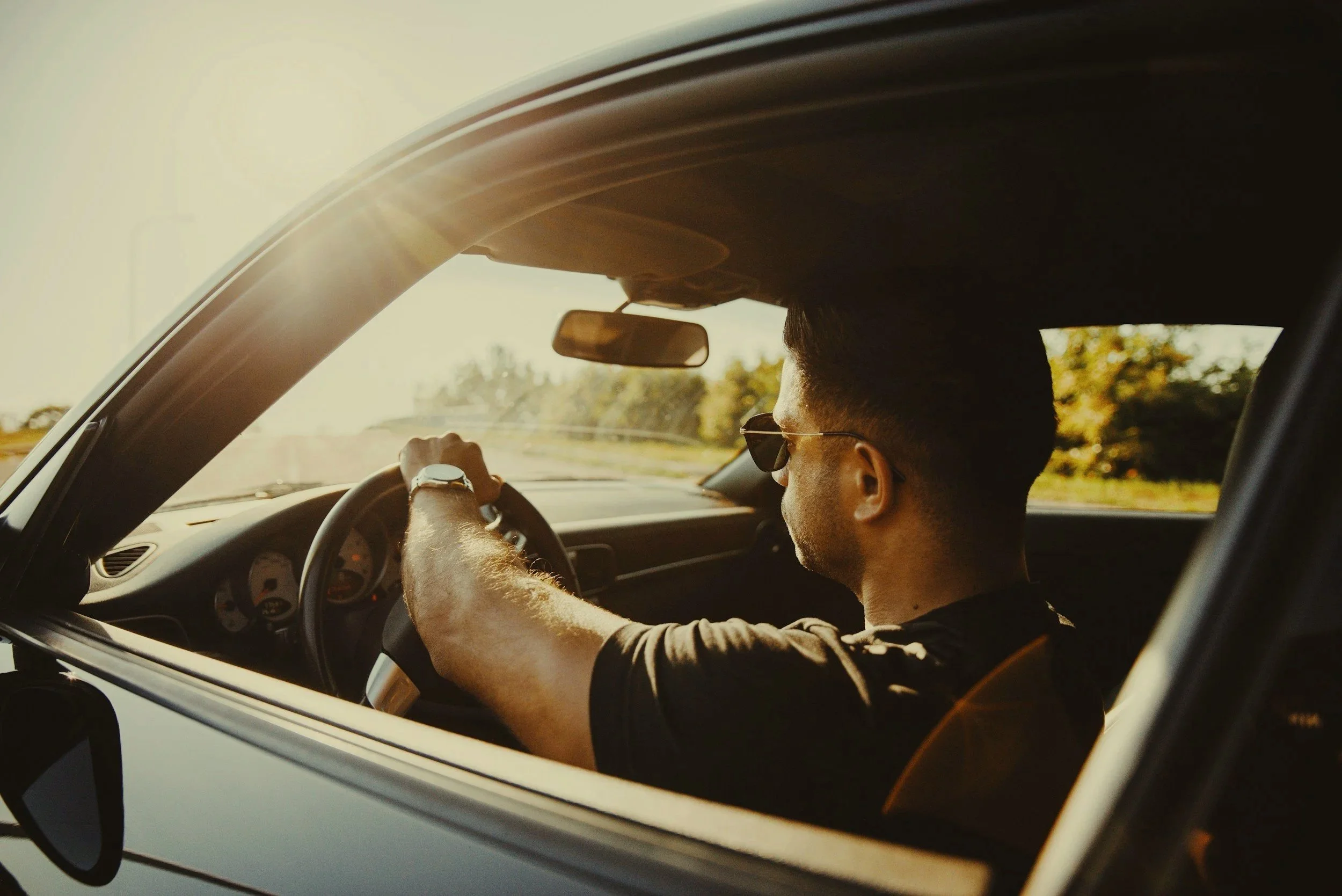
Minimize driving during rush hour. Times when traffic is heavier will be more stressful drives, so if you can make the drive at another time, adjust your plans. However, if driving during rush hour goes beyond stress and causes you anxiety, find a therapist to work toward this challenge. While avoiding anxiety provoking situations can feel helpful or provide relief in the short term, they can increase overall anxiety in the long term. Avoid avoidance!
Avoid unhelpful distractions. Everyone has different levels of focus when driving, so it is important to recognize what level of distraction you can safely tolerate when driving. Some people can easily multitask by driving safely while listening to music, a podcast, or chatting with others in the car or on the phone. Some can only focus in complete silence, while others find silence itself distracting. Notice what distractions you can safely manage and which reduce your ability to drive safely. If you find it helpful to listen to music or podcasts, plan what you will listen to before driving and minimize interacting with electronic devices while on the road. If you have a passenger, ask them to help if you want to adjust the playlist. And remember that handheld texting and driving is never safe. Research has found that texting and driving is as dangerous as driving while drunk, plus it is illegal in Texas as well as almost every other state in the US.
Engage in self-care before driving. Make sure you have gotten sufficient sleep, eaten regular meals, and addressed any health concerns before driving.
Bring a drink and maybe a snack to improve your physical comfort. Feeling thirsty or hungry may prove distracting, and you want all of your attention to be on driving safely and responsibly.
Don’t drive if you are not capable of doing so safely in the moment. Check in with your mental and physical health to make sure it will not be a significant distraction or even cause danger to you and other drivers on the road. If you feel safe at the start of the drive and this changes during the drive, pull over and give yourself time to feel ready to drive again. If you find you are not able to return to safety, call someone you trust and/or the mental health emergency hotline at 988 for assistance in getting safely off the road.
Use GPS when needed or helpful. This can be helpful for new drives so you can be rerouted if you get lost. Becoming lost can be stressful and lead to distracted driving. If you are not using GPS and become lost, consider pulling over to find your way. GPS can also be helpful to check traffic and find the fastest route. Getting stuck in substantial traffic is stressful for many drivers and, while it cannot always be avoided, there may be ways to minimize the time spent in traffic.
How Therapy Can Help with Driving Anxiety in Austin, Texas
For people with clinically significant anxiety about driving, or even for people with mild driving anxiety who feel they could benefit from professional assistance, therapy can help. Therapy can teach cognitive tools to help people learn to accept and cope with their distress without sacrificing safety when driving. Therapists can guide anxious drivers through a process of progressively more challenging drives as they build their tolerance for this anxiety and help drivers assess their readiness for more challenging situations. You can learn to lean on your values to motivate you to face your fears and turn away from avoidance. The types of driving that are difficult will vary from person to person, so you will work with your therapist to identify your readiness to try the types of driving you are avoiding. For example, for someone who avoids driving on highways, you may choose to try driving on busier roads first, then progress to smaller or more rural highways, and work your way up to the highways that are most challenging. Alternatively, someone might choose to work on the highways in order of the ones that are most important for their daily commute, but this must be done only when the person is ready to face this challenge and feels safe to try the drive. Your therapist may also help you find support in your social network to practice outside of therapy sessions.
Take the Next Step for Driving Anxiety Support in Austin
If driving in Austin feels stressful or overwhelming, you don’t have to face it alone. At Austin Anxiety and OCD Specialists, our therapists provide evidence-based support for teens and adults struggling with driving anxiety. We can help you:
Learn practical strategies to manage stress on challenging roads
Gradually build confidence behind the wheel
Address avoidance and fear in a safe, structured way
Call 512-246-7225 or email hello@austinanxiety.com to schedule a free consultation.
With the right guidance, you can feel steadier, safer, and more confident while driving in Austin.
Intensive Outpatient Program (IOP) for Driving Anxiety in Austin
For teens and adults who want more structured, consistent support, our Intensive Outpatient Program (IOP) at Austin Anxiety and OCD Specialists offers a higher level of care for driving anxiety. The IOP provides multiple therapy hours per week in a supportive, guided environment, combining:
Exposure and Response Prevention (ERP) to gradually face feared driving situations
Cognitive-behavioral strategies to manage anxious thoughts while driving
Skills training and coping techniques to reduce stress behind the wheel
Ongoing support from anxiety experts who specialize in anxiety and OCD
Our IOP is ideal for those whose driving anxiety interferes with daily life, including work, school, or essential errands, or for those who want to accelerate progress with intensive, structured therapy.
Through the program, participants build confidence, learn how to confront driving challenges safely, and develop lasting strategies to manage anxiety in a variety of driving situations.