
Separation Anxiety in Children: What It Really Looks Like and How Treatment in Austin, TX Can Help
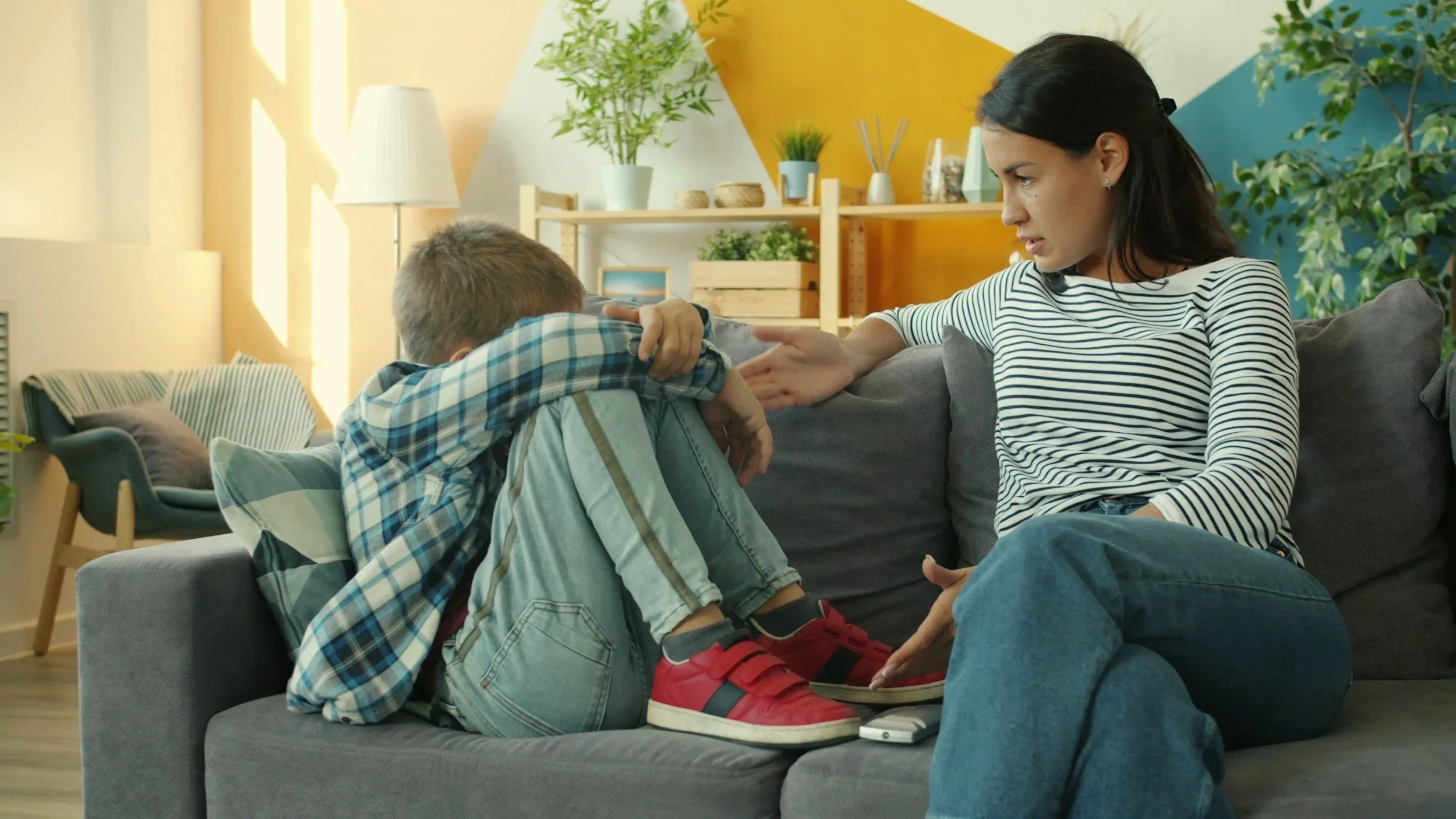
Every morning is a battle. Your child clings to your leg at school drop-off, crying in a way that doesn't stop when you round the corner; you know because you've checked. They call you from the nurse's office at least once a week with a stomachache that started, mysteriously, right after you said goodbye. Sleepovers are out of the question. Birthday parties are endured, not enjoyed. Bedtime is a negotiation that stretches an hour past when it should be over, because they can't fall asleep unless you're in the room.
You love your child fiercely. You also feel exhausted, guilty, and confused about what is normal anxiety and what is something that needs attention.
If this sounds familiar, you're not alone, and you're not doing anything wrong. What you're seeing in your child has a name. It's more common than most parents realize, and with the right support, children can and do get their lives back.
This guide is for parents who want to understand separation anxiety disorder: what it actually is, why it persists, and what treatment looks like, including when more intensive support might be the right next step.
What is Separation Anxiety Disorder?
Some degree of separation anxiety is a normal and healthy part of early childhood development. Infants and toddlers between about six and eighteen months typically protest when a caregiver leaves; this is developmentally appropriate and actually a sign of healthy attachment. Most children move through this phase naturally as they develop trust that their caregiver will return.
Separation anxiety disorder is different. It is a clinical anxiety disorder characterized by excessive, persistent fear or distress related to separation from attachment figures, most commonly parents or primary caregivers. The key words are excessive and persistent. A child with separation anxiety disorder doesn't just get nervous at drop-off during the first week of school. The anxiety is intense, consistent, and shows up across multiple situations in ways that go well beyond what is developmentally expected for their age.
To meet the diagnostic criteria for separation anxiety disorder, symptoms must be present for at least four weeks in children and cause meaningful distress or interfere with daily functioning at home, at school, or in social situations.
Separation anxiety disorder can emerge at any point in childhood or adolescence, though it is most commonly identified in children between the ages of seven and thirteen. It is one of the most common anxiety disorders in children. When left untreated, it frequently persists and can increase a child's risk for depression, other anxiety disorders, and substance use difficulties later in life. Early identification and treatment are important.
What Separation Anxiety Disorder Looks Like in Daily Life
The clinical criteria describe the symptoms, but they don't always capture what it actually feels like to live with a child who has this disorder. Here is what parents most commonly describe.
Morning drop-off becomes a daily ordeal. Tears, clinging, physical complaints, desperate bargaining. Your child isn't performing. The distress is real. But it also happens every single morning, not just on hard days, and it doesn't improve no matter how many times you reassure them that school is safe and you will be back.
Physical symptoms appear reliably before separation. Stomachaches, headaches, nausea, and sometimes vomiting that arrive predictably on school mornings, or before other separations, are extremely common in children with separation anxiety disorder. These are genuine physical symptoms driven by anxiety, not fabrications designed to avoid school. They often bring families to the pediatrician long before anyone considers anxiety as the cause.
Your child needs to know where you are at all times. Repeated check-in calls, texting the moment they're old enough to have a phone, distress if you're a few minutes late, anxiety when you step out for a quick errand. This isn't defiance or clinginess as a personality trait. It's anxiety about proximity and safety.
Sleep becomes a nightly struggle. Children with separation anxiety disorder often can't fall asleep without a parent present, frequently come to their parents' room during the night, or have nightmares about something terrible happening to you. Bedtime stretches into long reassurance rituals that offer temporary relief but don't touch the underlying anxiety.
Sleepovers, camps, and social activities get avoided. Experiences other children look forward to fill a child with separation anxiety disorder with dread. Even activities they genuinely want to participate in can feel impossible when separation is involved. Over time, some children stop wanting to be invited at all, because the anticipation becomes too painful to manage.
Your child worries that something bad will happen to you. This is one of the most distressing features of separation anxiety disorder for many families. The fear isn't just about being alone. It's about you. Your child needs repeated reassurance throughout the day that you are safe, that nothing bad has happened, that you will come back. Providing that reassurance feels like the loving thing to do, and it is. But it also tends to keep the anxiety going, which is something we'll come back to.
They hold it together at school and fall apart at home. Many children with separation anxiety disorder get through the school day through sheer internal effort, then release everything once they're home. Parents often hear from teachers that their child seems perfectly fine, which can make the intensity of what's happening at home feel invisible, confusing, and easy for others to dismiss.
Why Reassurance Makes Separation Anxiety Worse
The instinct when your child is distressed is to comfort them. To say you'll be fine, I'll be back at 3pm, nothing bad is going to happen, I promise. And in the short term, reassurance works. The distress decreases. Your child calms down enough to walk into school.
The problem is that reassurance, while loving and well-intentioned, maintains the anxiety over time rather than reducing it. When a child seeks reassurance and gets it, their brain learns that reassurance was necessary to manage the distress. The implicit message becomes that separation is something to be survived with the help of a guarantee, rather than something that is genuinely safe. The next separation comes, the anxiety spikes again, the reassurance is needed again, and the cycle continues.
This pattern is part of something researchers call family accommodation, which refers to the ways parents and caregivers adjust their behavior to help a child avoid or get through anxiety-related distress. Research consistently links high levels of family accommodation to more severe anxiety and greater difficulty functioning over time. Accommodation can take many forms: sleeping next to your child every night, driving them to school instead of using the bus, answering every check-in call during the day, skipping family events because your child can't tolerate the separation, letting them stay home on particularly hard mornings. Each one feels like the right call in the moment. Taken together, they send a signal to the child's nervous system that the fear is justified and that avoidance is the right response.
This is not a parenting failure. Parents accommodate because they love their children and because watching a child in genuine distress is hard. Understanding what accommodation does to the anxiety cycle matters not to assign blame, but because effective treatment has to address the family system, not just the child.
What Keeps Separation Anxiety Going
Separation anxiety disorder doesn't persist simply because a child is sensitive or because parents are doing something wrong. It persists because of a cycle maintained by both the child's internal responses and the responses of the people around them.
The child experiences separation as threatening. Their nervous system generates a genuine alarm response, which produces the distress parents see. The child seeks relief through proximity, reassurance, or avoidance of the separation altogether. That relief reinforces the belief that separation was dangerous and that the coping strategy, whether crying, clinging, complaining of illness, or calling repeatedly, was necessary and effective. The next separation arrives and the pattern repeats, often with the threshold for distress getting lower over time.
The people around the child adapt. Family members, school staff, and other adults reduce demands for separation, provide extra reassurance, and organize their behavior around what the child can and can't tolerate. These accommodations are compassionate. They are also what prevent the child from having the experiences that would teach them something different: that the feared outcome doesn't happen, that the feeling of anxiety is uncomfortable but tolerable, and that they are more capable of handling separation than the fear tells them they are.
What Effective Treatment for Separation Anxiety Disorder Looks Like
The good news is that separation anxiety disorder responds very well to treatment when the right approach is used. Treatment is not about toughening children up, forcing them into situations that overwhelm them, or telling them their distress isn't real. It's about creating carefully structured opportunities for a child to experience separation as manageable, and building that evidence gradually over time.
Cognitive Behavioral Therapy (CBT) for Separation Anxiety
CBT is the first-line, evidence-based treatment for separation anxiety disorder in children, supported by a strong body of research showing meaningful symptom reduction with low risk of adverse effects. It typically includes psychoeducation, cognitive restructuring, and graduated exposure to separation situations.
In practical terms, CBT helps children understand what anxiety is and why it feels the way it does, identify the specific thoughts driving their separation fears (something bad will happen to my parents, I won't be able to cope without them), develop more accurate and flexible ways of thinking about those fears, and practice separations in a graduated way that starts with what feels manageable and builds from there.
Parent involvement is a core component of effective CBT for separation anxiety disorder, not an add-on. How parents respond in the moments before and during separation either reinforces or gently challenges the anxiety pattern. Therapists work with parents to develop responses that communicate warmth and confidence at the same time: I hear that this is hard, and I know you can handle it.
Exposure and Response Prevention (ERP) for Separation Anxiety
Exposure therapy is the engine of change in anxiety treatment. The goal is for the child to practice separation in situations structured to produce success, starting with brief, lower-stakes separations and building systematically toward harder ones.
The response prevention component means that during exposures, children practice tolerating the anxiety without seeking the reassurance or proximity that would normally cut the experience short. Drawing on inhibitory learning principles, the goal is not for the anxiety to disappear during the exposure. It is for the child to learn that the feared outcome did not occur, that the anxiety was tolerable, and that they are more capable than the fear suggested. Each completed exposure builds a stronger foundation of evidence against the fear.
SPACE (Supportive Parenting for Anxious Childhood Emotions)
SPACE is a parent-based treatment developed at the Yale Child Study Center that takes a different approach. Rather than working directly with the child, SPACE works with parents, helping them reduce accommodation while maintaining a warm, supportive response to their child’s distress.
A randomized controlled trial published in the Journal of the American Academy of Child and Adolescent Psychiatry found SPACE to be noninferior to child-focused CBT for common childhood anxiety disorders. In practical terms, working with parents alone produced outcomes comparable to child-focused therapy, while leading to greater reductions in family accommodation.
SPACE is particularly useful when a child is reluctant to engage in therapy, when anxiety is closely tied to family accommodation patterns, or when parents prefer to be the primary agents of change. At Austin Anxiety and OCD Specialists, we offer SPACE as a standalone treatment and as a complement to child-focused therapy.
When Weekly Therapy Isn't Enough: IOP for Separation Anxiety
For most children with separation anxiety disorder, weekly outpatient therapy is an appropriate and effective starting point. But some children need more.
When separation anxiety is severe enough to be significantly disrupting school attendance, preventing a child from participating in age-appropriate activities, or causing significant distress for the whole family on a daily basis, an Intensive Outpatient Program (IOP) provides a level of structure and frequency that weekly therapy simply can't match.
At Austin Anxiety & OCD Specialists, our IOP for children with separation anxiety involves multiple individual therapy sessions per week with a licensed clinician who specializes in childhood anxiety. The frequency of sessions means that exposures can be practiced, processed, and built upon rapidly, without the large gaps between sessions that allow old patterns to reassert themselves. Parent coaching is integrated throughout, ensuring that what happens at home between sessions supports rather than undermines the work being done in therapy.
Our IOP also extends beyond the office. Because separation anxiety shows up in real-world situations, real-world practice is part of treatment. Clinicians work with children in the environments where anxiety actually occurs: school transitions, community settings, and other places where separation is part of daily life. This is where the most meaningful generalization happens.
IOP typically runs over two weeks with at least 20 hours of individual treatment, followed by a step-down plan into weekly therapy to consolidate gains and continue progress. For families traveling from outside the Austin area to access specialized treatment, our program is designed to produce meaningful progress in a focused period of time. We also offer a fully virtual IOP for families who cannot travel, available across Texas and in most U.S. states.
IOP may be the right fit if your child's separation anxiety has not responded sufficiently to weekly therapy, if the severity of symptoms is significantly disrupting daily functioning, or if you want to make faster, more concentrated progress before a key transition like the start of a new school year.
A Note to Parents Who Are Exhausted
If you have been managing your child's separation anxiety for months or years, you are probably tired in a way that is hard to describe. Tired of the morning battles. Tired of the guilt when you leave. Tired of rearranging your life around what your child can and can't tolerate. Tired of not knowing whether you're helping or making things worse.
What you're experiencing has a name, it has effective treatment, and you don't have to keep managing it by yourself. Separation anxiety affects the whole family, not just the child, and getting help is one of the most important things you can do for both of you.
Therapy gives children the tools to manage separation in ways they couldn't before, and for most families the trajectory changes meaningfully. Kids who once couldn't get through a school morning go on to sleep in their own beds, attend school without daily crises, and develop the kind of confidence that comes from learning they can handle hard things.
If you're in Austin, Westlake, Round Rock, Cedar Park, Georgetown, Leander, or the surrounding communities, we would be glad to talk with you about what support might look like for your family. Families outside the Austin area who are looking for intensive treatment are also welcome to reach out about telehealth and our IOP.